Rhythmic Gymnastics is a beautiful sport where the gymnast performs routines on a floor area of 13 square metres to music and using apparatus. It is a mixture of gymnastics, dance and calisthenics which promotes body awareness and coordination skills that will assist in the development of any sport.
Benefits include:
- Develops good posture
- Body awareness and balance
- Enhances coordination and agility
- Increases flexibility and strength
- Enhances creativity and self confidence
Gymnasts are judged on their artistry, execution and difficulty of skills. They perform leaps, balances and rotations while using the apparatus. The apparatus must be used in both hands, thrown into the air and be kept in constant motion.
These apparatus include:
- Rope
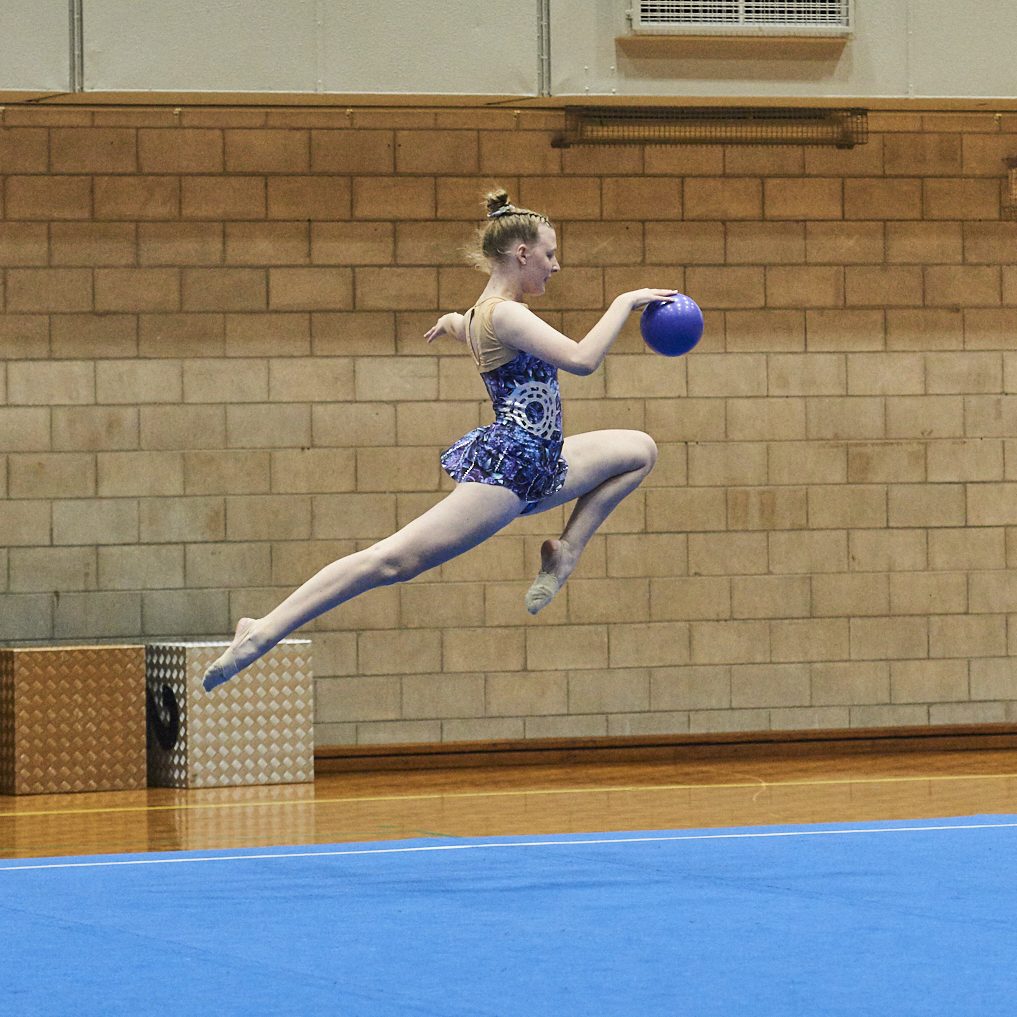
- Ball
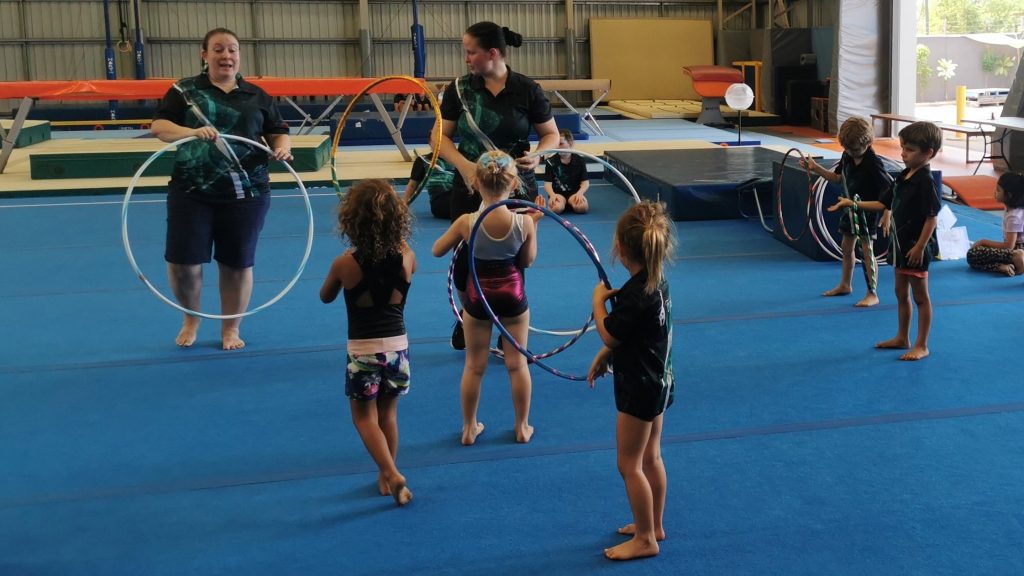
- Hoop
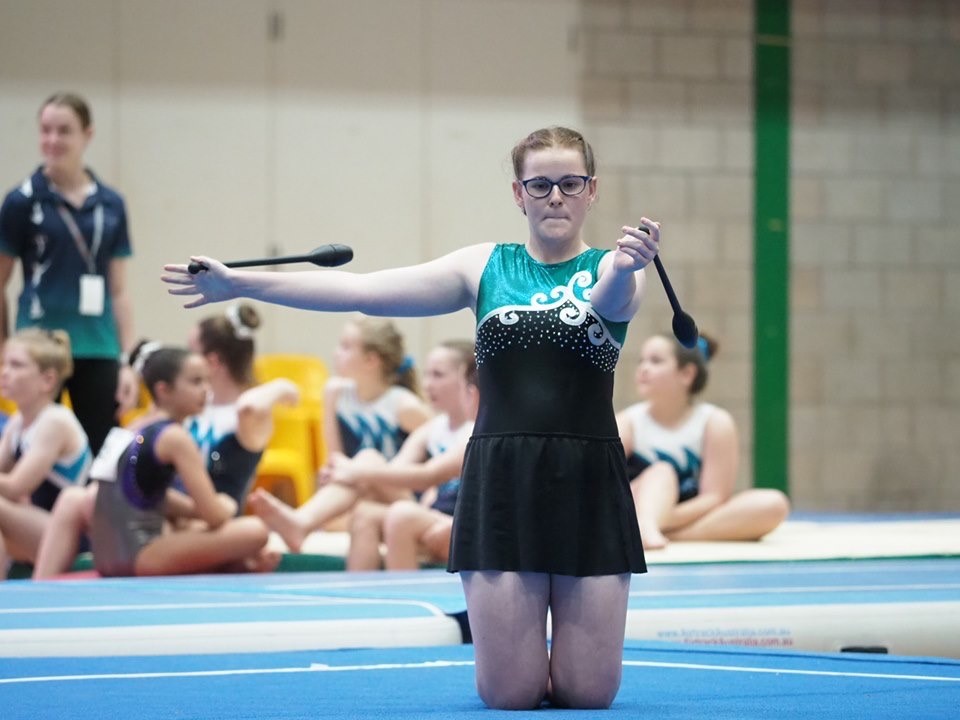
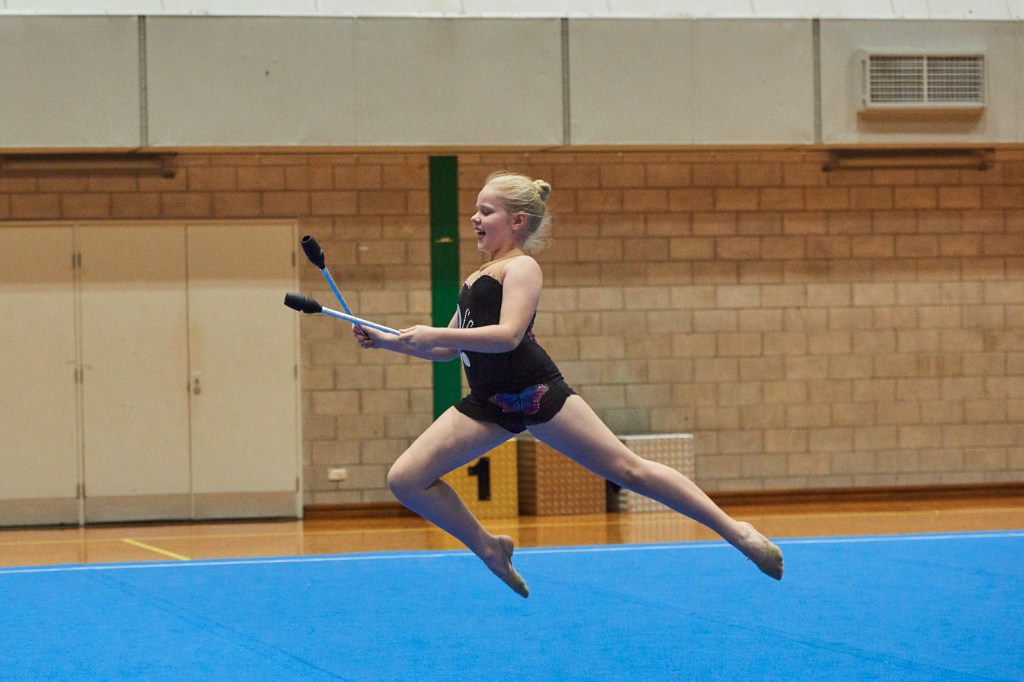
- Clubs
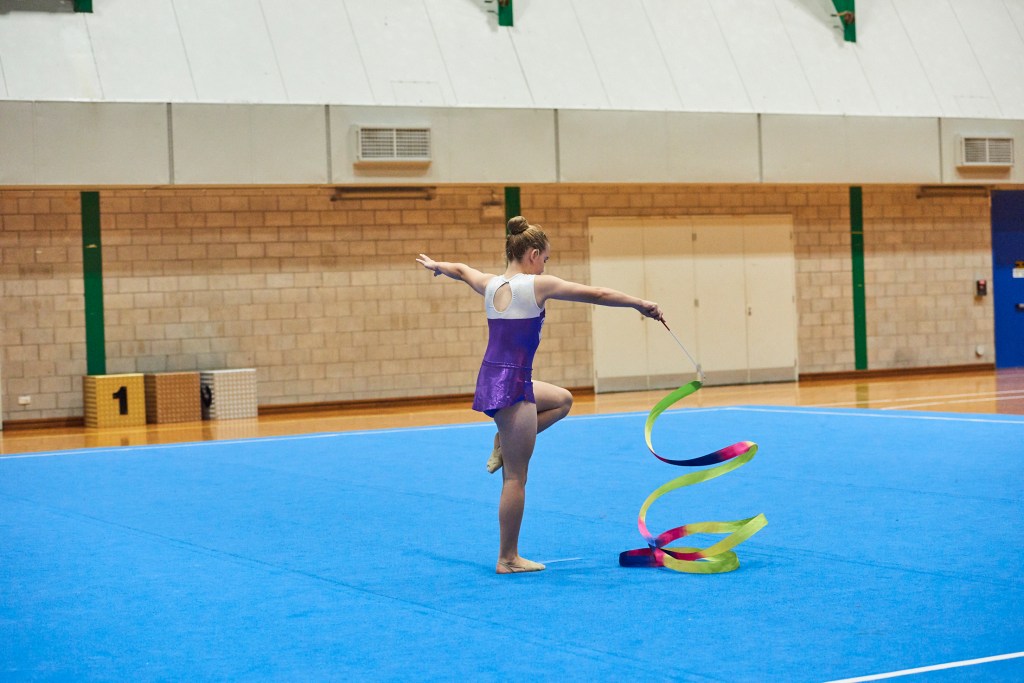
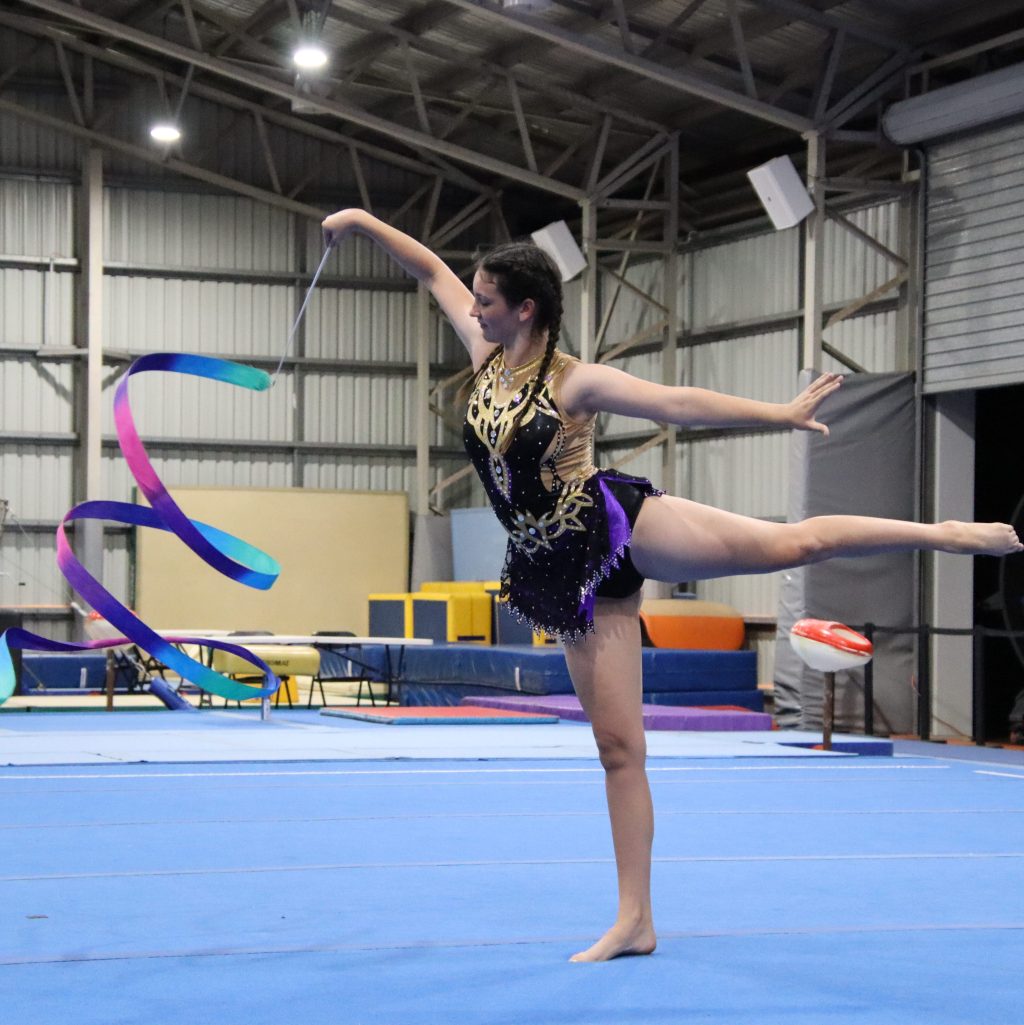
- Ribbon
Rope
Rope is made of a synthetic material, which retains the qualities of lightness and suppleness. The length of the rope depends on the height of the gymnast and is measured by the gymnasts standing on the rope with both feet and holding the ends of the rope to the gymnast’s armpits. Knots at each end of the rope are for keeping hold of the rope while doing the routine.
Gymnasts use the rope to leap over or skip while adding in swings, throws, circles, rotations and figures of eight.
Ball
The rhythmic ball is made of rubber or synthetic material and is 18 – 20cm in diameter, and a minimum weight of 400g. The ball can be any colour.
The ball is held by resting in the hand and not against the wrist or by being grasped.
Elements of a ball routine include throwing, bouncing or rolling the ball. The gymnast must use both hands and cover the whole floor area whilst showing continuous flowing movements.
Flexibility and body waves are a compulsory part of this apparatus.
Hoop
Hoops are made of plastic or wood. They are covered with one or several colours adhesive tape, often to designed to complement the design of the gymnast’s leotard.
The hoop is measured by standing it on the floor by the gymnast and ensuring that the height does not extend past the gymnast’s hip bone.
Fundamental requirements of a hoop routine include rotation around the hand or body and by adding rolls, swings, circles, figures of eight, throws and passes through and over the hoop.
Clubs
Clubs are made of rubber or plastic. The handles and bodies are typically wrapped with decorative tapes.
There are different length clubs are available depending on the size of the gymnast. These are measured by holding the handle in the centre of the palm of the gymnast’s hand and measuring against the length of the gymnast’s arm. The club should not reach past the middle of the upper arm.
Club routines include rhythmical tapping, mills and small circles, asymmetric movements, throws and catches. The clubs must be used in both hands and in one hand. It is one of the more difficult pieces of apparatus to use.
Ribbon
The ribbon is made of satin or another similar material cloth of any colour in full, be multi-coloured and/or have designs on it. The ribbon itself must weigh at least 35g, and be 4–6cm in width. The length of the ribbon ranges between 5m and 6m depending on the level of the gymnast. The ribbon must be in one piece. The end that is attached to the stick is doubled for a maximum length of 1m . This is stitched down both sides. At the top, a very thin reinforcement or rows of machine stitching for a maximum length of 5 cm is authorized. This extremity may end in a strap, or have an eyelet (a small hole, edged with a buttonhole stitch or metal circle), to permit attaching the ribbon.
The ribbon is fixed to the stick by means of a supple attachment such as thread, nylon cord, or a series of articulated rings. The attachment has a maximum length of 7cm, not counting the strap or metal ring at the end of the stick where it will be fastened.
Compulsory elements for the ribbon routine include flicks, circles, snakes, spirals and throws, while still showing large, smooth and flowing movements.
While being one of the most beautiful and popular of the rhythmic apparatuses, the ribbon requires a high degree of co-ordination to form the spirals and circles as any knots which may accidentally form in the ribbon are penalized. The ribbon must continue moving otherwise points are taken off.
Freehand
Freehand is a routine performed without apparatus where the emphasis is on style, technique and execution of dance skills. Freehand is most often seen in lower levels.
Clothing
Gymnasts are asked to wear leotards and leggings/bike pants. A black leotard is preferred, but not essential.
Hair and Jewellery
Hair must be tied back (preferably in a bun)
It is expected that jewellery will not be worn to training as it can impact on the safety of the gymnast, though gymnast’s with pierced ears may wear small stud-type earrings.
Read more about Rhythmic Gymnastics:
 elementalgymnastics.org